
Design That Shapes Culture & Everyday Life
เผยแพร่เมื่อ 4 months ago
Design That Shapes Culture & Everyday Life
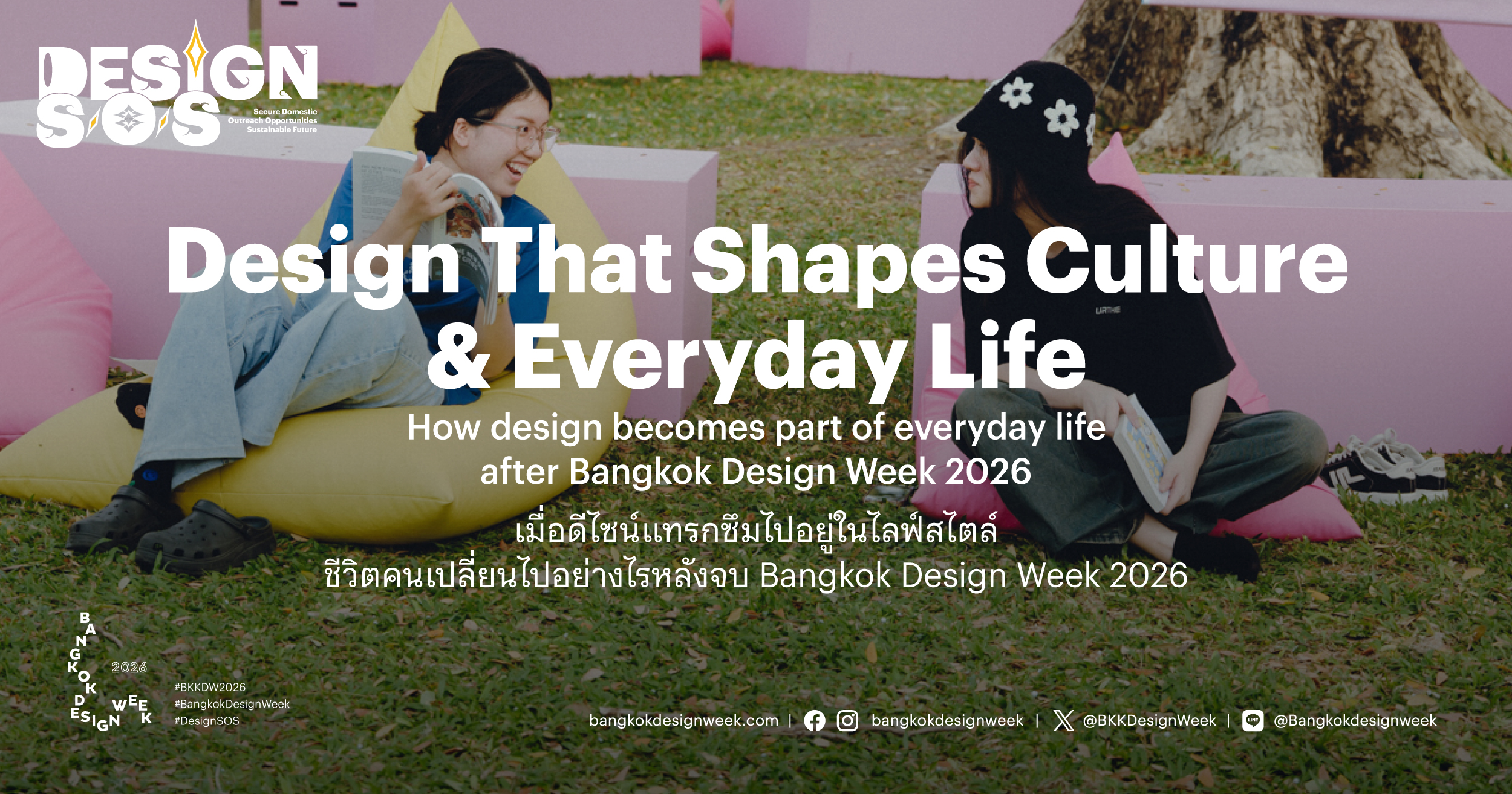
How design becomes part of everyday life after Bangkok Design Week 2026
Some designs are made to look beautiful. Others make life more convenient. But many projects at Bangkok Design Week 2026 went beyond that – becoming part of daily life, shaping new experiences, changing behaviors, strengthening communities, and even building long-term cultural ecosystems.
From reviving old book districts into long-term learning spaces, to colorful public installations and urban furniture that invite people to pause and connect, these projects show how people’s understanding of “design” is slowly changing – from something we simply look at, to something we naturally live with every day.
Cultural District
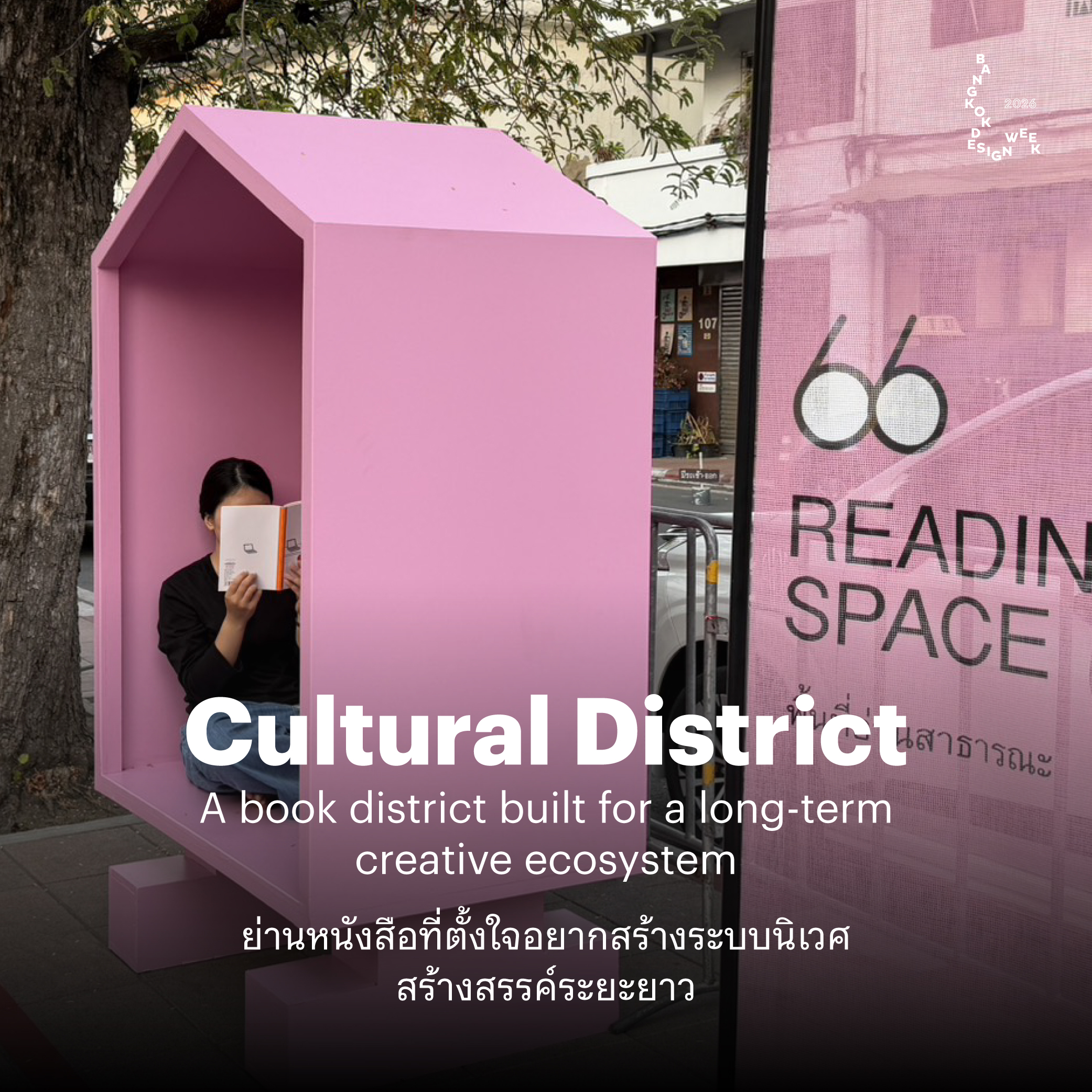
A book district built for a long-term creative ecosystem
BKK Book District is not just a temporary project, but a long-term cultural development initiative located across historic book-trade areas including Phan Fa, Wang Burapha, Fueang Nakhon, Nakhon Kasem, Sao Chingcha or the Giant Swing, Tha Tien, and Nang Loeng.
The project brings together independent bookstores, creatives, and local communities to create activities and networks that strengthen the district’s economy, publishing industry, and cultural identity.
District Identity
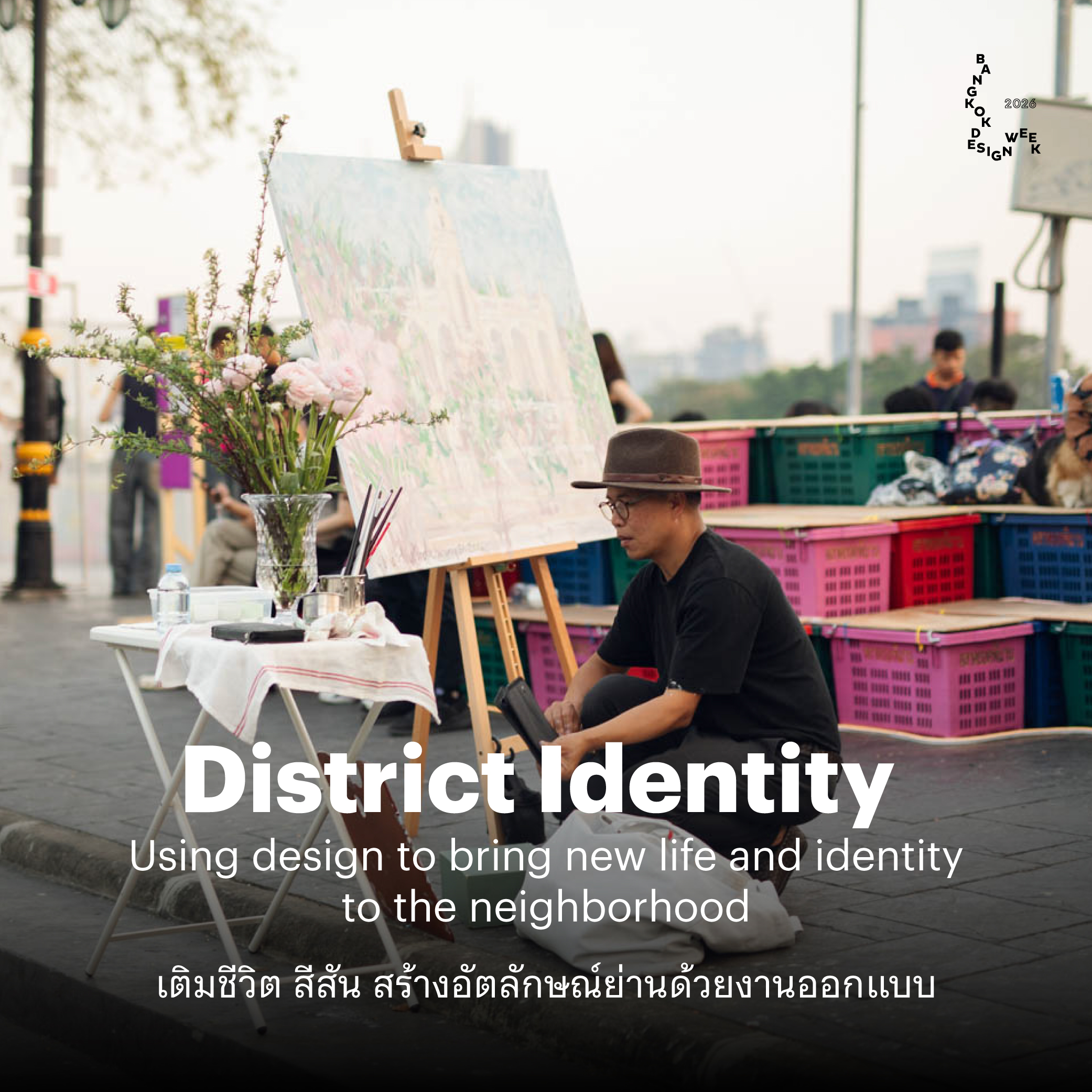
Using design to bring new life and identity to the neighborhood
Over the past few years, art and design installations across Pak Khlong Talat have gradually transformed the image of the flower market district.
Today, the area regularly hosts exhibitions and creative activities throughout the year. During Bangkok Design Week 2026 alone, the district featured live painting, green space design projects, nighttime lighting projections, and large-scale illuminated installations.
These works slowly reshape how people see and remember the neighborhood. In the future, design may become an inseparable part of Pak Khlong Talat’s identity and collective memory.
Urban Furniture & Installations
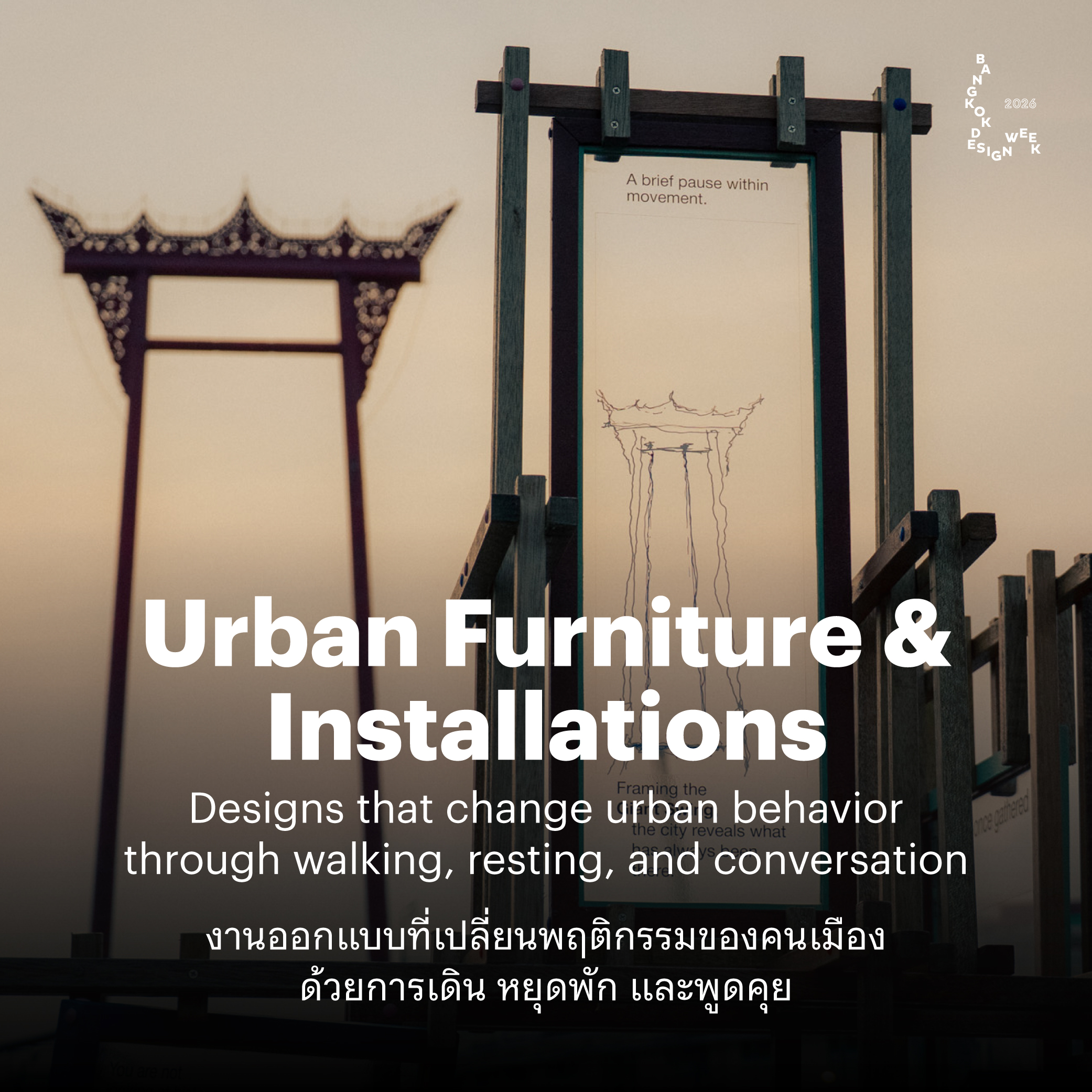
Designs that change urban behavior through walking, resting, and conversation
As people in cities interact less with each other, some public design projects aim to gently change everyday behavior.
Projects like Little Portal transformed ordinary pathways into storytelling spaces through art, while treasure-hunt activities on Ong Ang Island encouraged people to explore public spaces through walking.
Meanwhile, Mini Pocket Pause reimagined a canal-side area in Banglamphu as a small resting space that reflects the community’s identity, adds greenery to the neighborhood, and creates a place for people to sit, talk, learn together, and welcome visitors passing through.
แชร์