
A Conversation with Jenchieh Hung + Kulthida Songkittipakdee / HAS design
เผยแพร่เมื่อ 4 months ago
A Conversation with Jenchieh Hung + Kulthida Songkittipakdee / HAS design and research
When Streetlights, Mesh Fabrics, and Public Plazas Become Architecture for the People at Bangkok Design Week 2026
If we talk about “design for survival,” Bangkok might be one of the cities that shows it most clearly. We see it in fabric shades stretched over street stalls, vehicles turned into extensions of shops, or boats adapted into temporary bridges across canals. These everyday solutions reflect the instinct of people finding ways to live with the city’s limitations — and sometimes we forget they are also a form of design.
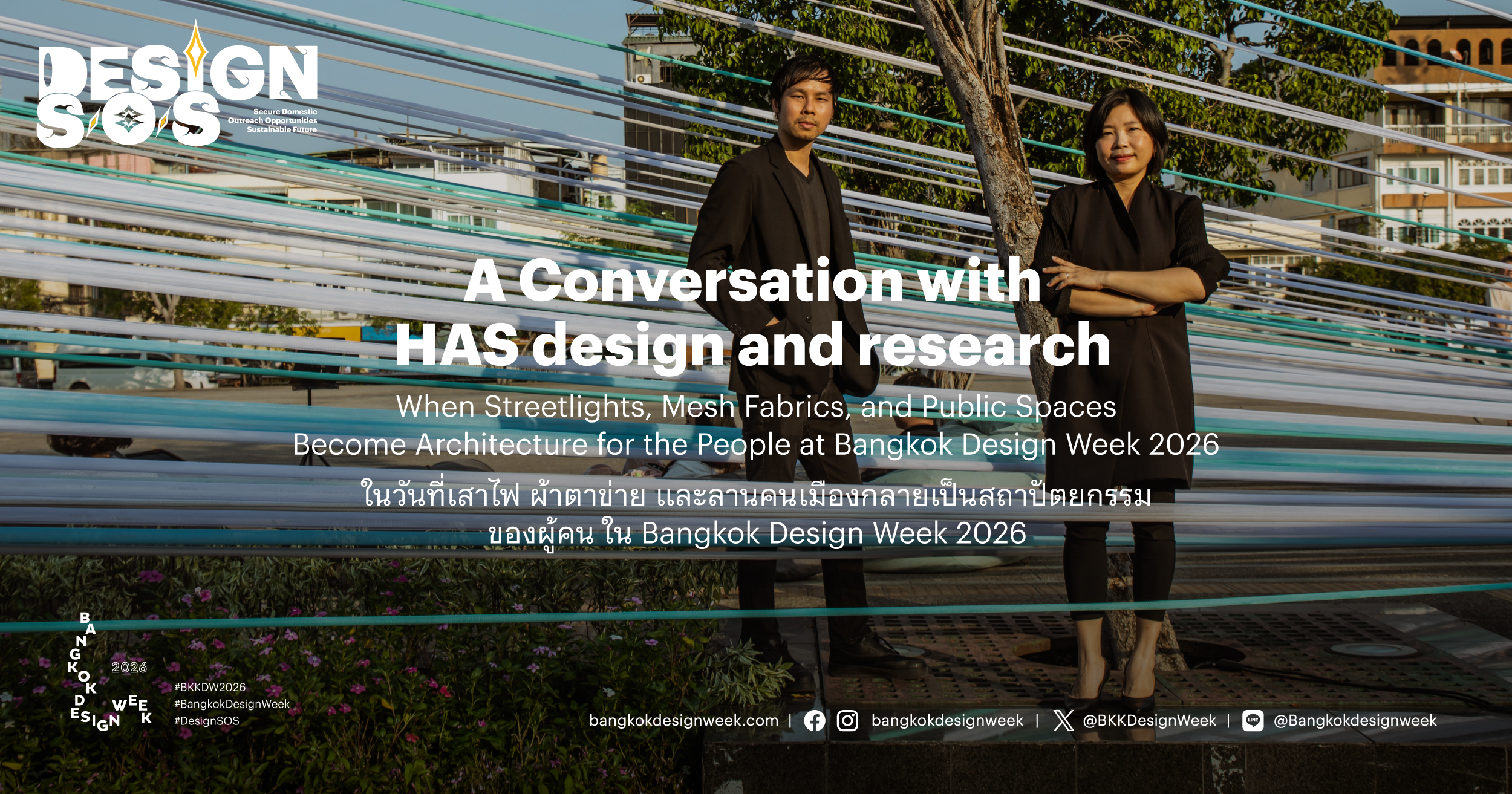
Jenchieh Hung and Kulthida Songkittipakdee have been working across architecture, research, and education. Alongside teaching at Chulalongkorn University’s Faculty of Architecture, both architects have spent years working internationally — from France, Japan, and China to studios such as Renzo Piano Building Workshop and Kengo Kuma & Associates — before returning to Bangkok to build their practice together.
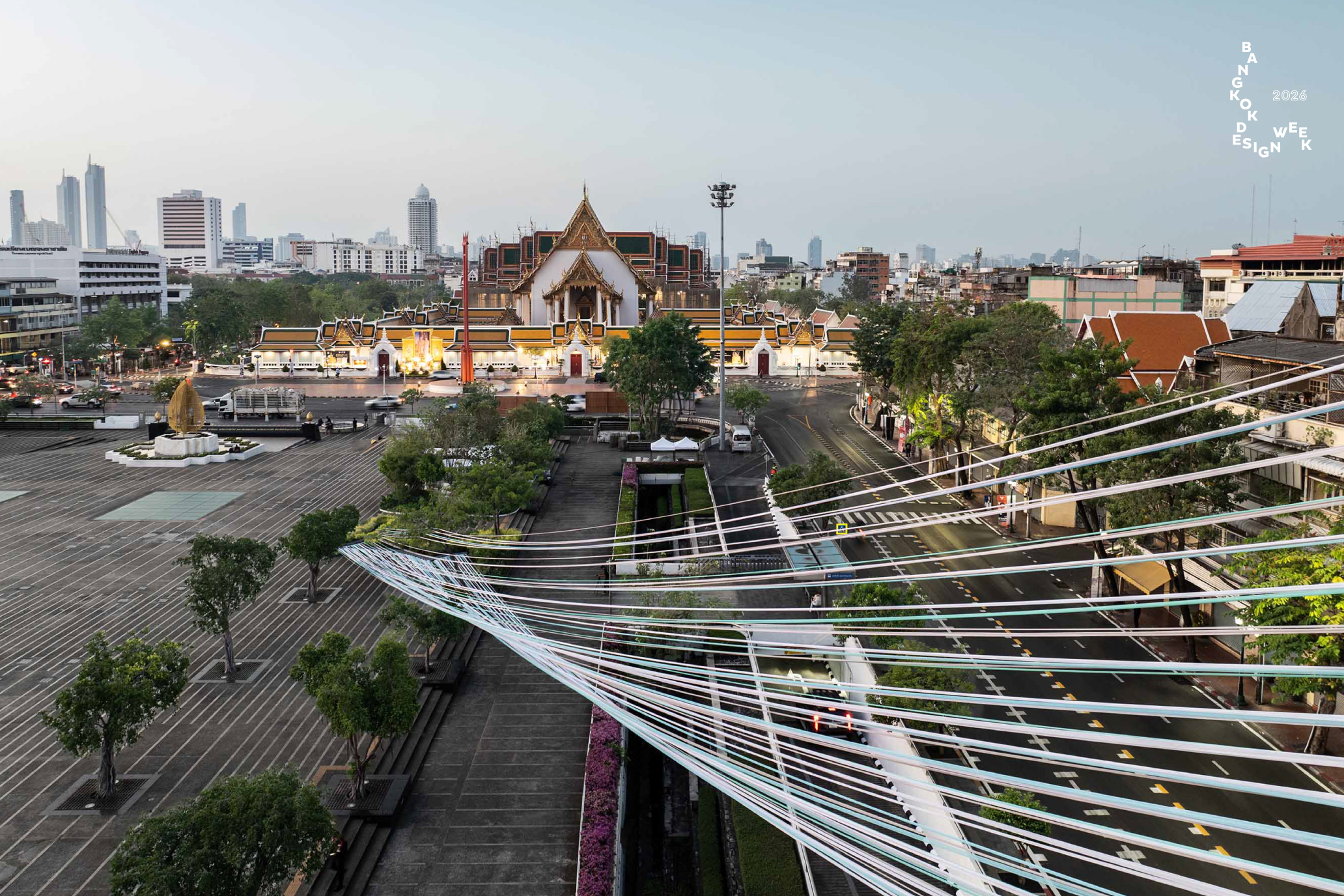
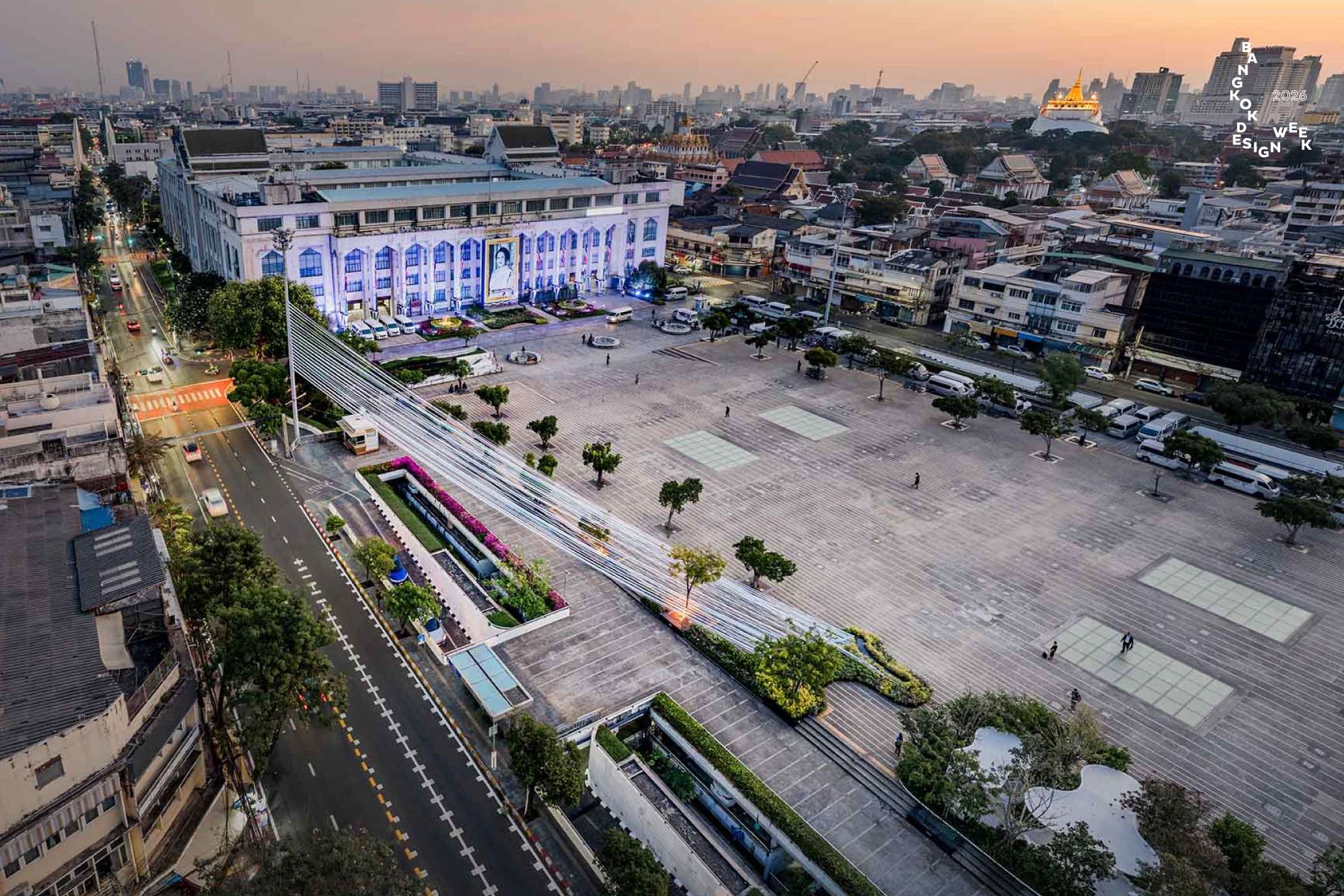
For Bangkok Design Week 2026, they explored the language of the city through ordinary things we often overlook. This became High Line Bangkok, a People Pavilion installed in front of Bangkok City Hall.
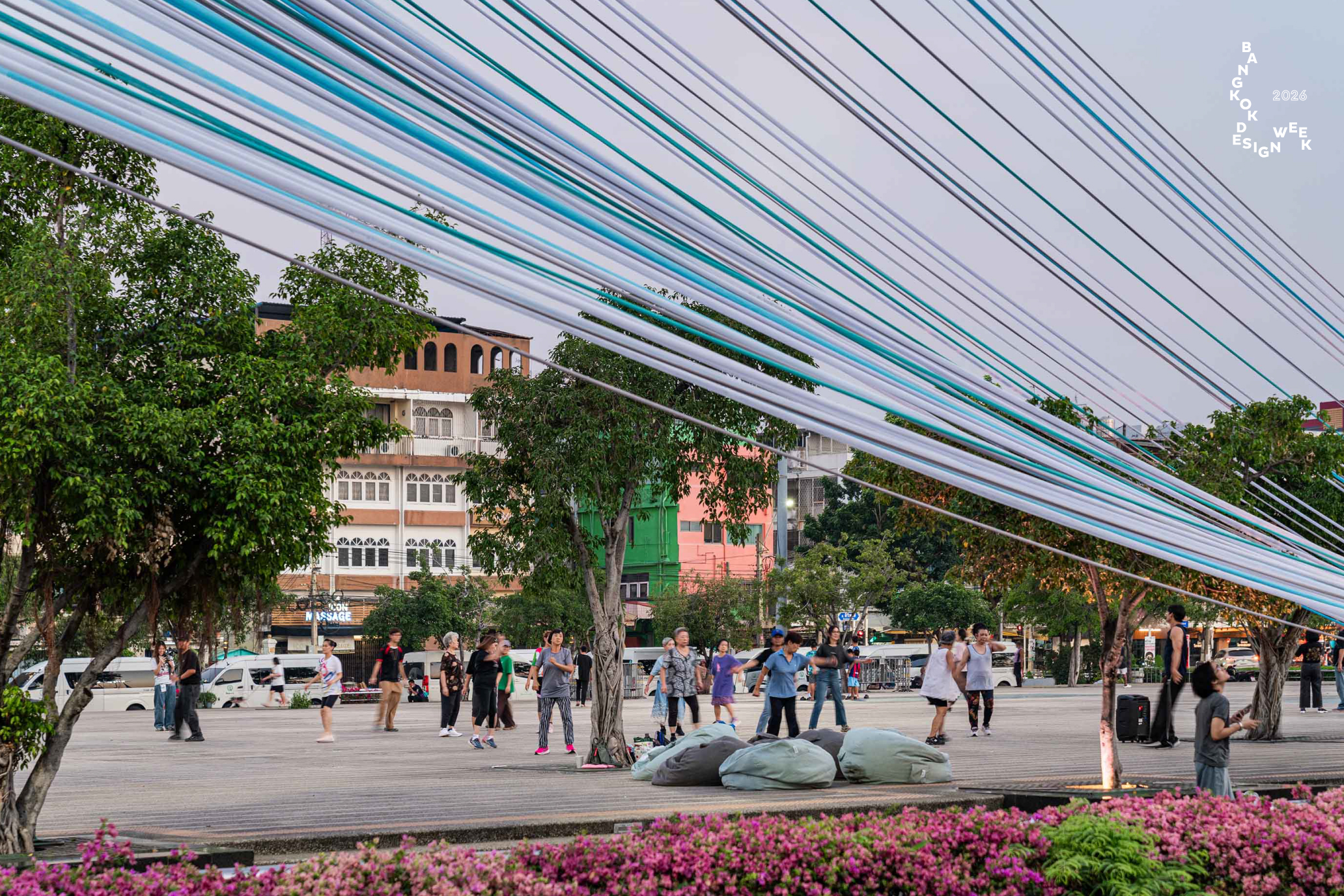
Using white and green mesh fabric attached to existing streetlight poles, they transformed a hot public plaza into a temporary space filled with shade, breeze, and a new atmosphere that invited people to stay. During the day, it became a resting space; at night, light softly flowed through the fabric. Although the installation was temporary, it left behind an important question: could the things we walk past every day become something more?
Today, we invite everyone to revisit the beginning of this project through a conversation with Jenchieh and Kulthida about their process, their thoughts on cities and people, and the role of design in a rapidly changing world.
For HAS design and research, architecture is not just about creating buildings, but about understanding the relationship between people, place, and context. The perspectives of Jenchieh Hung and Kulthida Songkittipakdee have been shaped through years of working both in Thailand and abroad — from France, Japan, and China to studios such as Renzo Piano Building Workshop and Kengo Kuma & Associates — before returning to Bangkok to establish HAS design and research together. They believe good design does not always have to be the most iconic, but the kind that understands its surroundings and people most deeply.
Q : Why is “understanding context” such an important part of the HAS design and research approach?
Kulthida : If I compare it simply, it’s like telling a story in a film. You first need to understand the plot — where the story takes place and what already exists there. Architecture is similar. We may know what we want to build, but we also need to understand the people, atmosphere, and stories around the site that can connect with the architecture.
The design approach of HAS design and research is also like a film that slowly reveals itself. People gradually discover the space as they move through it and leave with a different feeling from when they first entered.
We once described our work in the book Chameleon Architecture: Shifting / Adapting / Evolving as being like a chameleon. Sometimes the architecture stands out, and sometimes it blends into its surroundings, depending on what the context needs at that moment.
Jenchieh : Understanding context is at the heart of design because architecture should not simply be an object placed onto a site. It should grow from the relationship between place, people, and everyday life. We pay close attention to the environment, culture, and how people use the space so the architecture can connect naturally with people.
For us, architecture is not only about form, but also about creating experiences and relationships between people and place.
Bangkok Design Week 2026 has been an important platform for HAS design and research to explore how design can create new conversations about the city. After returning to Thailand from Shanghai, the studio first joined the festival by opening their Phetkasem studio and inviting people to learn about materials and the surrounding neighborhood. Over time, they also saw how the festival gradually brought new energy to many districts across Bangkok.
For BKKDW2026, they reflected on the idea of “Bangkok” through both the People Pavilion and the Sustaining Bangkok Identities exhibition, inviting people to rethink the relationship between the city, its people, and contemporary design.
Q : What was the starting point, concept, and process behind the People Pavilion?
Kulthida : The project started when the Urban Ally team from the Phra Nakhon district invited us to participate this year. It sounded simple, but there were many challenges behind it, especially the limited budget and the fact that the site would host several activities at the same time.
Previously, HAS design and research had designed several outdoor pavilions in China, so we were already familiar with working within difficult conditions. We immediately accepted the invitation because this was something we had wanted to do in Bangkok for a long time.
For the People Pavilion at Bangkok Design Week 2026, we began by observing how people actually used the space. During the day, people stayed under trees to escape the heat, while at night they gathered around the streetlights. That made us ask: how could we connect these two conditions without building a new structure?
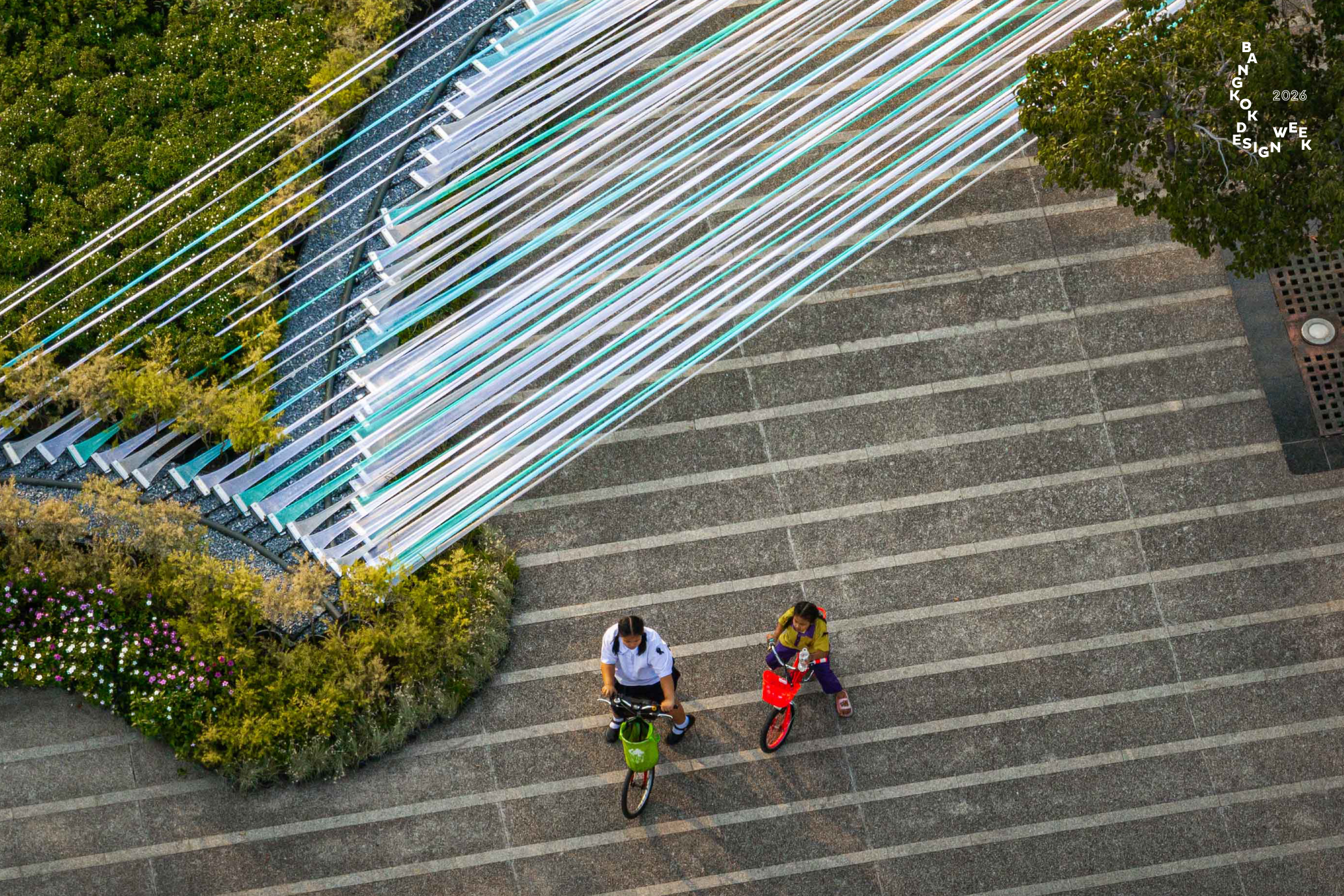
We decided to use the existing streetlight poles as the main structure and stretch flexible mesh fabric between them. The fabric could filter sunlight, allow wind to pass through, and create soft lighting at night, transforming the hot plaza into a new shaded public space.
The idea also connected to the theme “Design SOS” and the way Thai people adapt with whatever is around them — from street vendors using parked vehicles as part of their shops to temporary boat bridges built by local communities. We wanted to reinterpret those everyday survival methods into the pavilion.
After the festival ended, the mesh fabric was donated to Kasetsart University and transformed into skirts, almost turning the project into a zero-waste installation.
Q : What about the Sustaining Bangkok Identities exhibition presented alongside it during Bangkok Design Week 2026?
Jenchieh : Sustaining Bangkok Identities was another project we developed alongside Bangkok Design Week 2026 together with graduate students from the i+mARCH program at Chulalongkorn University’s Faculty of Architecture. The exhibition explored how Bangkok’s identity can continue to evolve alongside the future of the city.
Rather than seeing identity as something fixed, the project viewed it as something shaped by people, memories, daily life, and the urban environment. We believe that learning through observing the real city, together with collaboration between education and professional practice, is important for creating new perspectives on Bangkok’s future.
The Future of Thai Design Through the Eyes of HAS design and research
Q : Where do you think the Thai design industry is right now?
Kulthida : I’ve been lucky to see the industry from many perspectives — as an architect, educator, and guest editor for international magazines covering contemporary architecture in Thailand and Southeast Asia. It has allowed me to see the bigger picture of how the field is growing.
Honestly, I think we are in a very good moment right now, both in terms of design quality and the ecosystem around it. There is much more support than before, along with more platforms helping people understand the value of design. And this doesn’t only affect designers. It also changes how project owners and clients see design. Once they understand its value, the whole industry can continue to grow.
Globally, Europe and the US are also paying more attention to Asia. In many European cities, there is little space left for new buildings, while Asia still has strong cultural identities that the world is interested in. I think the future for Thai designers is brighter than ever.
Jenchieh : The Thai design industry is moving from creating beautiful work to creating meaningful value that connects with people, society, and the environment. Younger designers are beginning to ask how design can influence cities and everyday life. This is an important moment because Thailand is starting to build a new design identity that combines contemporary ideas with cultural roots.
Q : In today’s connected design world, do “identity” and “locality” still matter?
Kulthida : Very much. It’s something I always teach my students. Designers need to know what they want to say and what they truly want to create. Without that clarity, design cannot really grow.
At the same time, locality is what makes us stand out globally. Contemporary Thai identity is different from Indonesia or Malaysia, and that uniqueness is an opportunity for Thai designers to go much further.
Jenchieh : I think the more connected the world becomes, the more important identity and locality become as well. They are what give design meaning and uniqueness. Contemporary design today is not about removing differences, but about reinterpreting cultural roots, memories, and ways of life in a way that connects with the present world.
Q : What does “sustainability” really mean for the design industry?
Kulthida : Today, the word “sustainability” is everywhere. But for the design industry, I think the most important kind of sustainability is the mental sustainability of designers themselves.
Designers need direction and a clear sense of purpose. Without that, design cannot grow, and fewer people will want to continue in the field. Real sustainability begins with helping people keep creating meaningful work.
Jenchieh : Sustainability in design is not only about green materials or new technology. It is about creating a system where people, creativity, and resources can grow together in the long term. Good design should understand the environment, the economy, and people’s quality of life at the same time, even as the world continues to change.
Q : What direction would you like to see public architecture in Bangkok move toward?
Kulthida : One day after work, we looked up and saw electrical wires stretching across the sky. It made us wonder, what if these wires had colors? Later, we started seeing people post photos of similar views on social media, much like High Line Bangkok. For me, that was a sign that people were beginning to look at the city differently.
I would like to see urban infrastructure become more connected to everyday life, instead of feeling separate from people. In China, for example, there are power stations where people can learn about how electricity is produced. Infrastructure becomes part of public space. Bangkok also has that potential — we just need to rethink how existing structures can create new value for the city.
Jenchieh : Public space should not simply be empty space, but a place that reconnects people, the city, and nature again.
Q : In a world and city that are changing so quickly, what role do you think design plays for people and society?
Kulthida : It heals people emotionally, without a doubt. One moment I still remember clearly was during the installation of High Line Bangkok. A homeless man who usually slept near one of the streetlight poles walked over, looked at the pavilion, and simply said, “Beautiful.” At that moment, I realized design really can uplift people’s feelings, even in a very small way.
Another memorable moment was seeing a group of elderly people who usually did aerobics in the plaza facing the same direction every day. Once the pavilion was installed, they naturally turned toward it and started using it as a new backdrop, without anyone telling them to. That’s what design can do without words. Even people with no background in design can still feel the value that a space creates.
Jenchieh : The faster the world changes, the more important design becomes in creating relationships between people, cities, and the future. For HAS design and research, design is not only about creating something new, but also about creating understanding, hope, and happiness for people during times of change.
photos by iameverything and DOF Sky|Ground
แชร์