
Temple of Dusk
Tower of Dusk
Both ceramic and architecture helped create colorful, unique, decorative designs in the past. In the
late Ayutthaya period, architecture began applying imported porcelain from China called
“Benjarong” (which later shifted to local production in Thailand) as a facade expression. The most
outstanding found from Ayutthaya time is Wat Yai Intharam in Chonburi, where there are thousands
of ceramic plates placed like dot patterns. In the Taksin to Rattanakosin era, Wat Arun was
constructed as a masterpiece of architecture developing ceramic use in facades. Today, the use of ceramic in architecture is limited in Thailand, while the beauty and craft of Benjarong is less appreciated.
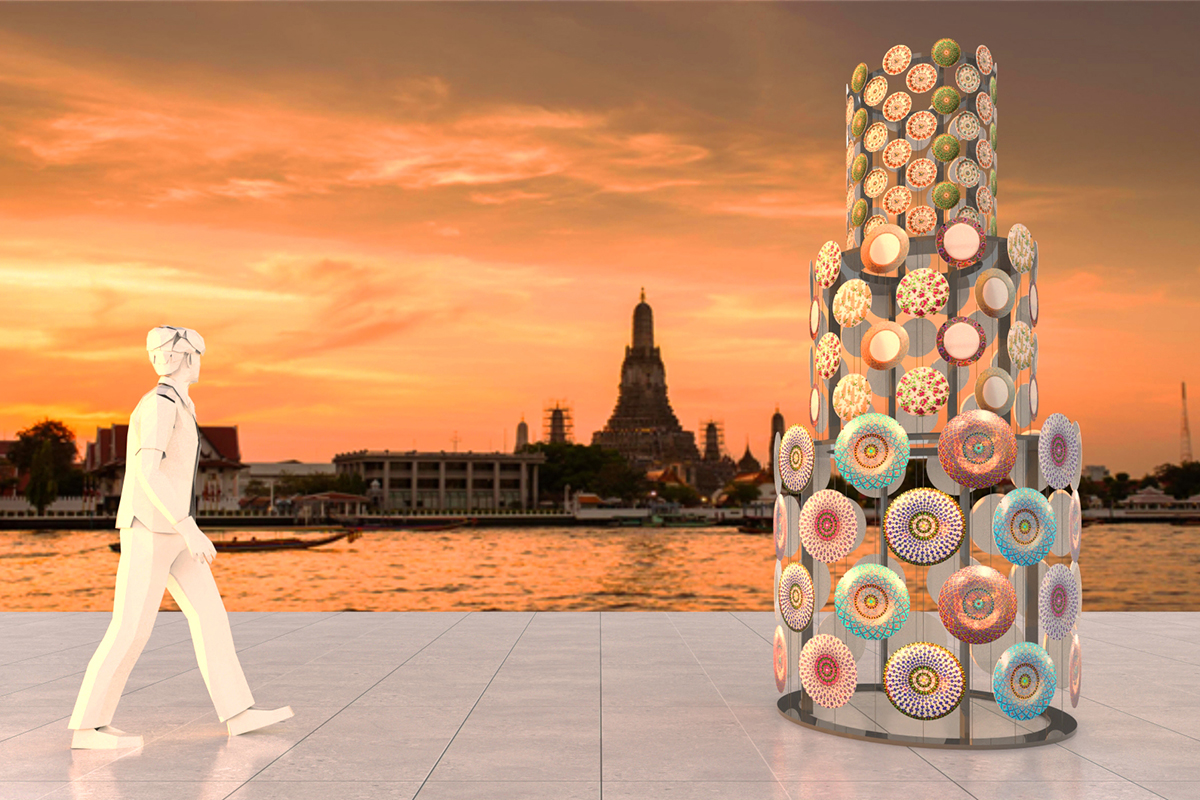
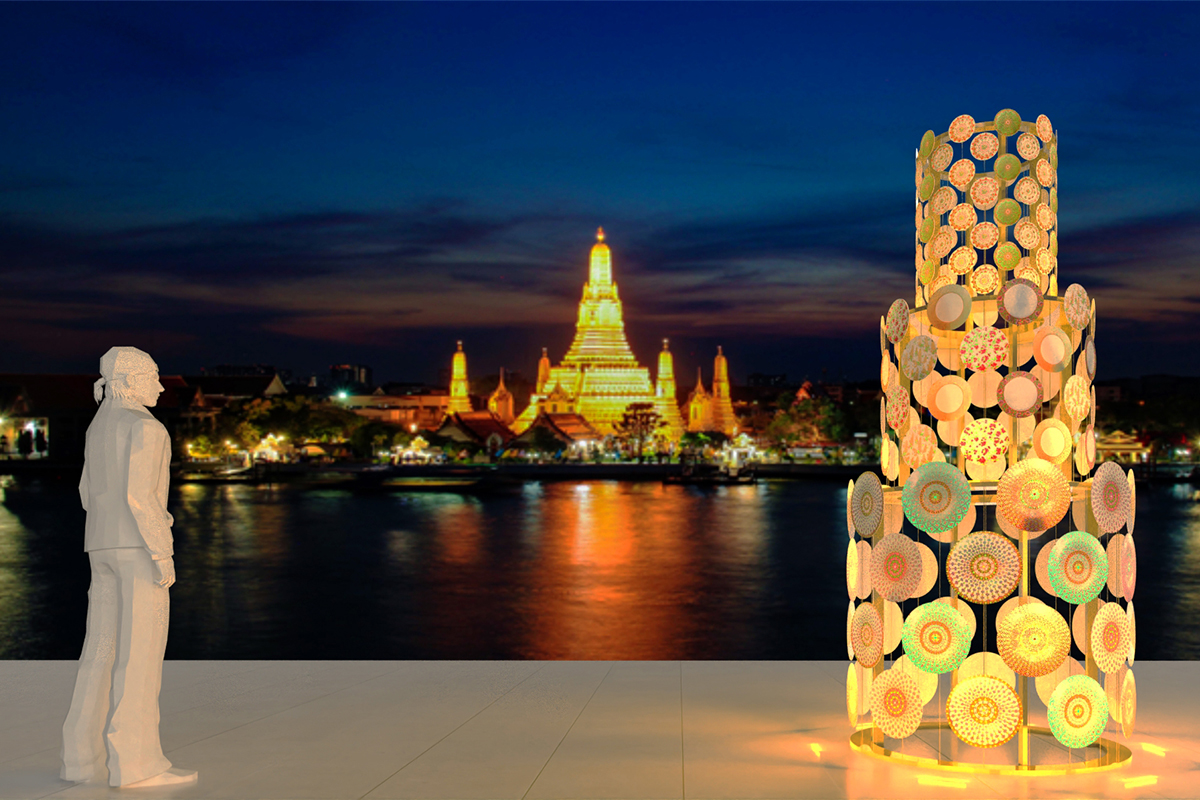
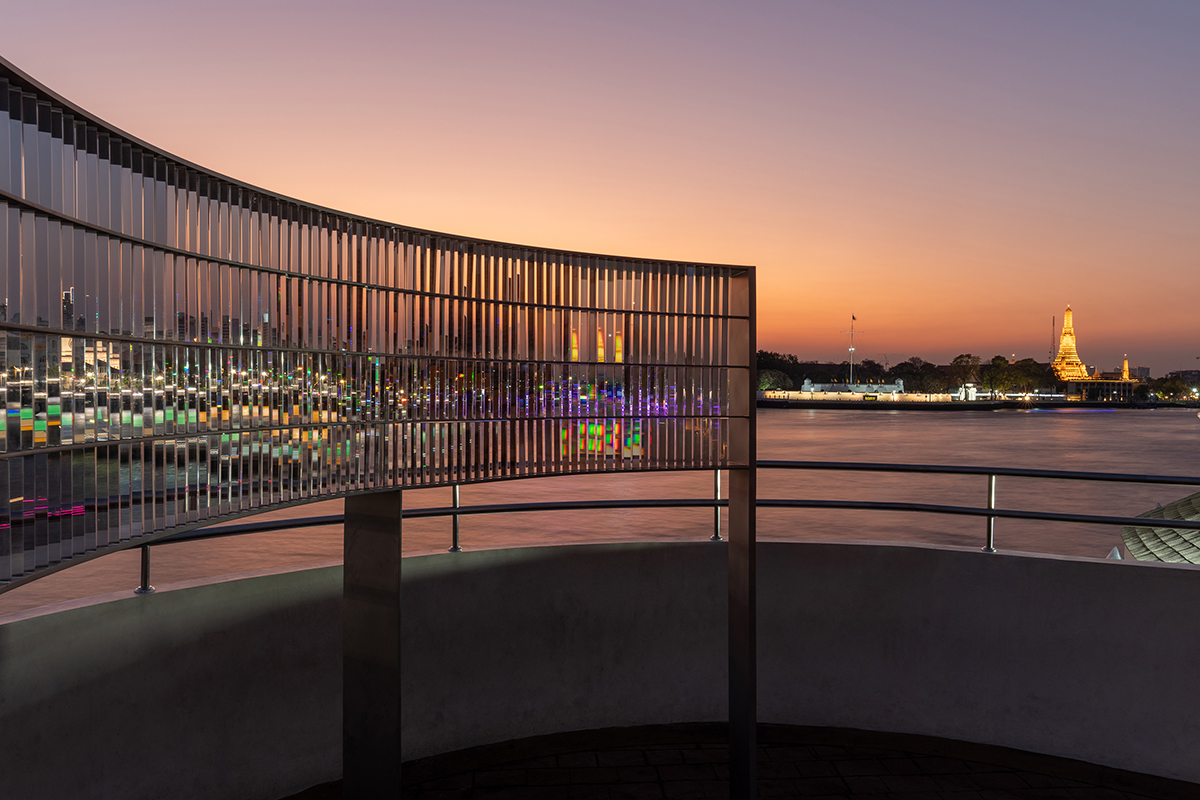
The tower of dusk proposes a structure standing opposite the temple of dawn, the other name of the Wat Arun. The structure reflects the light of sunset and is illuminated at night. Panels are suspended by stainless-steel cables to share a new architectural detail to recall the past legacy, while promising the future of ceramic use in architecture, while embracing Benjarong craft.
The proposed site is located either at Wat Pho Pier or Tha Tien Pier, where there is good visibility
towards Wat Arun on the opposite side. Wat Arun receives morning sunlight which paints the
building in a remarkable color. On the opposite side of Wat Arun is known to enjoy the sunset of
Chao Phraya River where things are painted in crimson at dusk. At nighttime, many symbolic
structures are illuminated to celebrate the cultural heritage of Bangkok.
Benjarong Plates
There will be 3 sizes of Benjarong plates to be used, provided by Thai Issekyu.
All pieces are hand painted and made in Thailand by Thai craftsmanship, representing the core of
Thai design.
40 pieces of 16-inch (40cm) diameter plates are used at the bottom structure where there is good
visibility from the visitors. 40 pieces of 12-inch (30cm) diameter plates are used at the middle
structure and have refined patterns as well. 80 pieces of 8-inch (20cm) diameter plates are used at
the top structure with less pattern, but have more quantity and density
There are 3 structures made to accommodate 3 sizes of the Benjarong Plates. Each structure forms a cylinder shape made with sand blast finish stainless steel. The structural frame supports stainless
steel cables. Each cable has fitting to support Benjarong plates without damaging them, while allowing for an easy assembly, and replacement. For the installation, 3 structures to be carried within
a van without plates. At the site, each structure will be placed on top of each other and get fixed to its position. Apply each plate to the fitting to let them be in a position. Linear LED to be plated at
nighttime for brightening up the structure. After the event, the structure will be demounted and relocated for possible future events.
Attending
Free
Schedule
29 Jan - 8 Feb 11:00 - 22:00
Venue
Tha Tien Pier
Tha Tien Pier
Phra Borom Maha Ratchawang Subdistrict, Phra Nakhon District
Bangkok 10200, Thailand
Phra Borom Maha Ratchawang Subdistrict, Phra Nakhon District
Bangkok 10200, Thailand
Share