
we!park
Active Walk-Flow 01
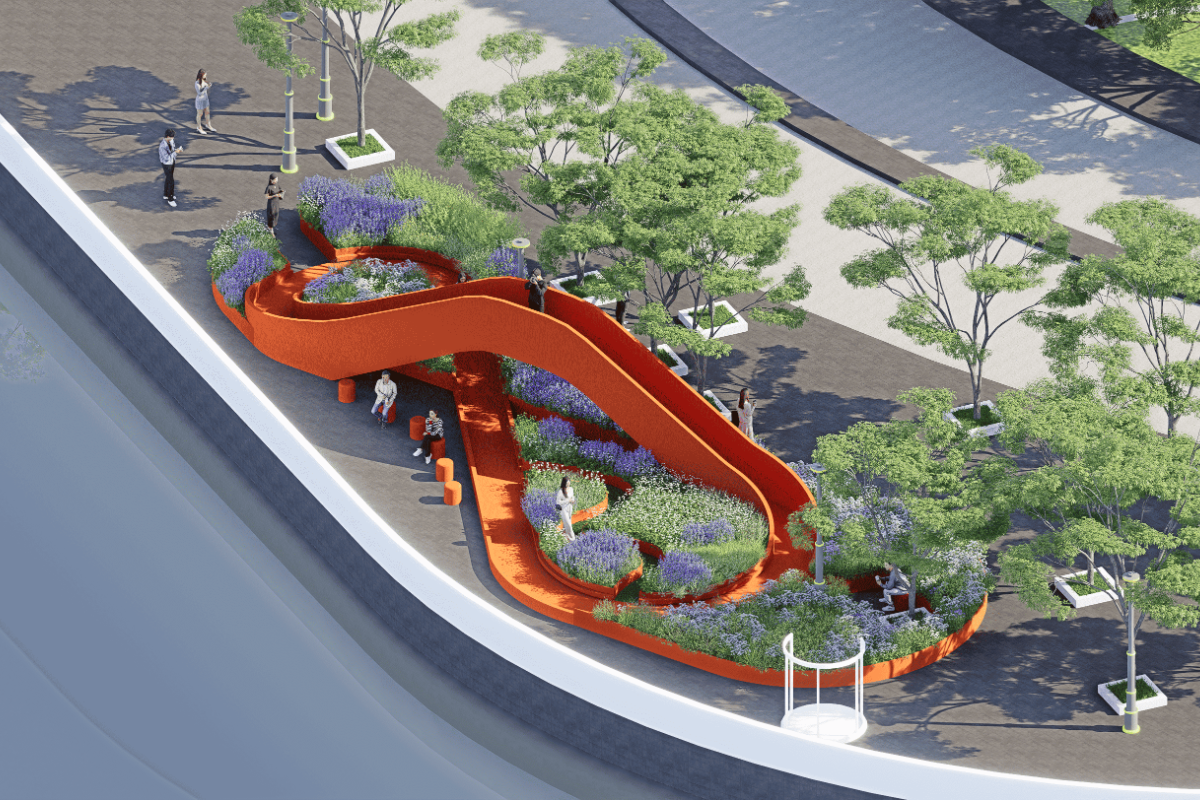
Longevity has become one of today’s defining trends, focused on living longer with quality. It means a long life that goes hand in hand with good health, physical, mental, and spiritual, the ability to stay active, avoid chronic illness, and preserve strength and independence for as long as possible.
One of the most measurable tools we can work with is also the simplest: walking. Research shows walking delivers wide-ranging benefits, and movement is increasingly described as one of the most effective forms of “medicine,” with proven support. It strengthens the body, lowers the risk of serious disease, and can even stimulate clearer thinking and creativity, with studies suggesting creativity increases by up to 60 percent compared with prolonged sitting.
With funding support from the Thai Health Promotion Foundation, we!park, together with Noble and The Faculty of Architecture of Silpakorn University is launching an experimental project: Active Walk-Flow. The project invites everyone to test walking along a comfortable, walkable route from Pak Khlong Talat to Song Wat, turning the act of walking into both a question and an answer: can longer, consistent walking genuinely improve our health?
Small public green spaces like inner-city pop-up parks will act as key test points. Research consistently shows that walking in green environments can significantly improve both physical and mental well-being, making these pop-up parks practical catalysts that encourage people to keep moving while offering moments of rest, shade, and connection.
Each pop-up park will link into a continuous, safe walking route through the district and connect to other public spaces across the city. The aim is to support everyday movement for people of all ages, so a “park” is not only a destination, but a connector to the neighborhood, a reason to step outside, meet others, and feel less alone, a city that supports both body and mind.
Finally, walking patterns will be documented through technology, including AI-based detection and measurement. The data will be used to evaluate results and inform future Healthy Space design.
Contact
Share