
The AA Visiting School Bangkok
Curartistry: Food Cultures
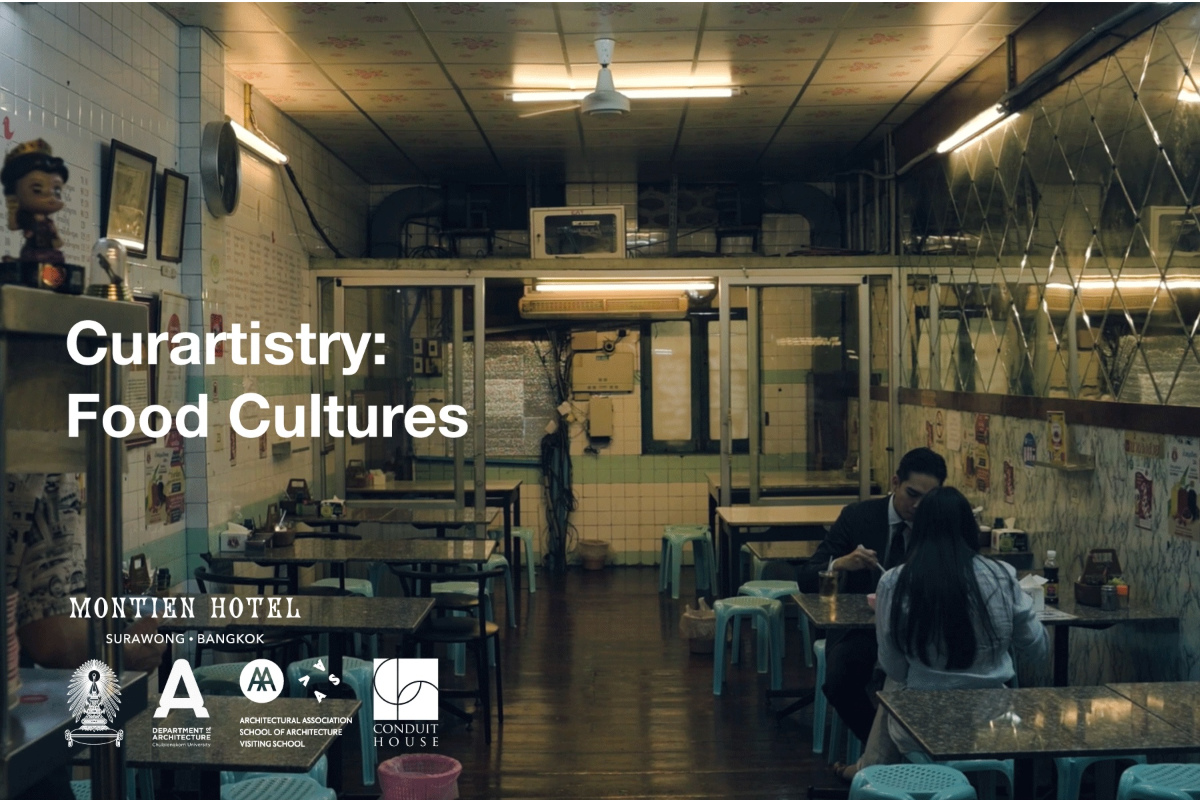
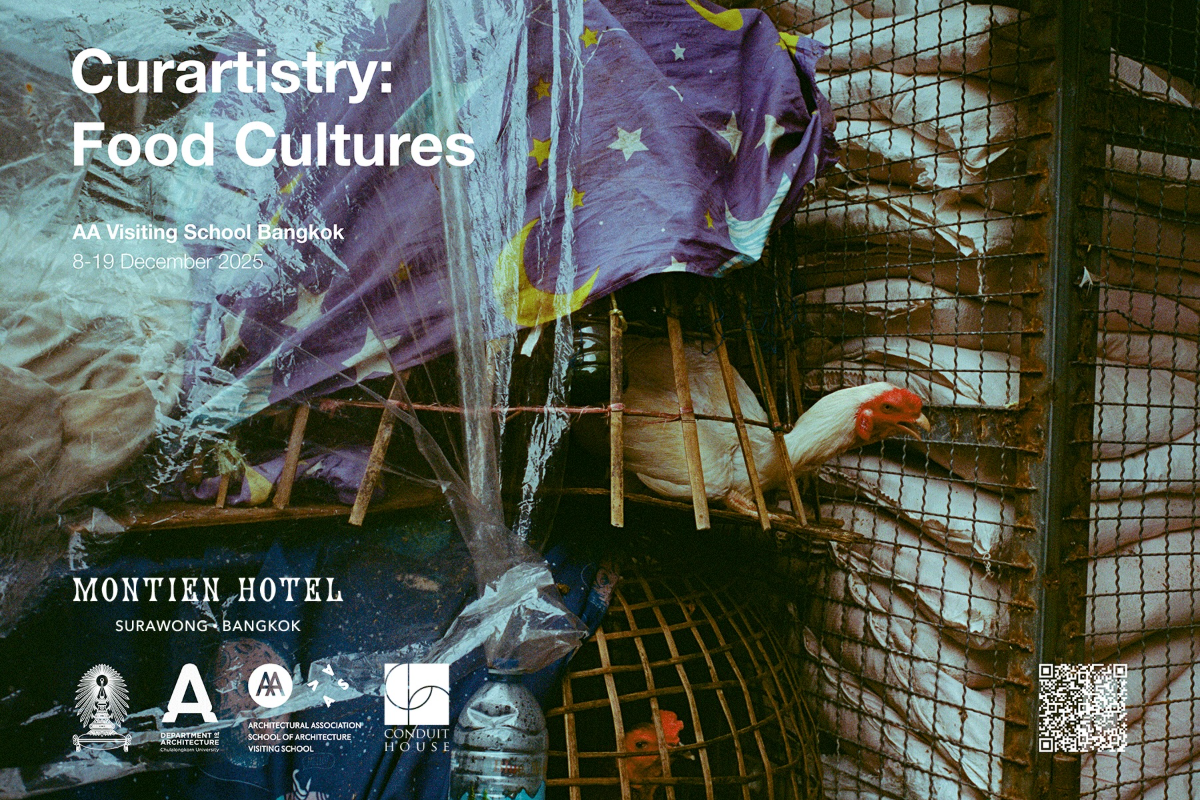
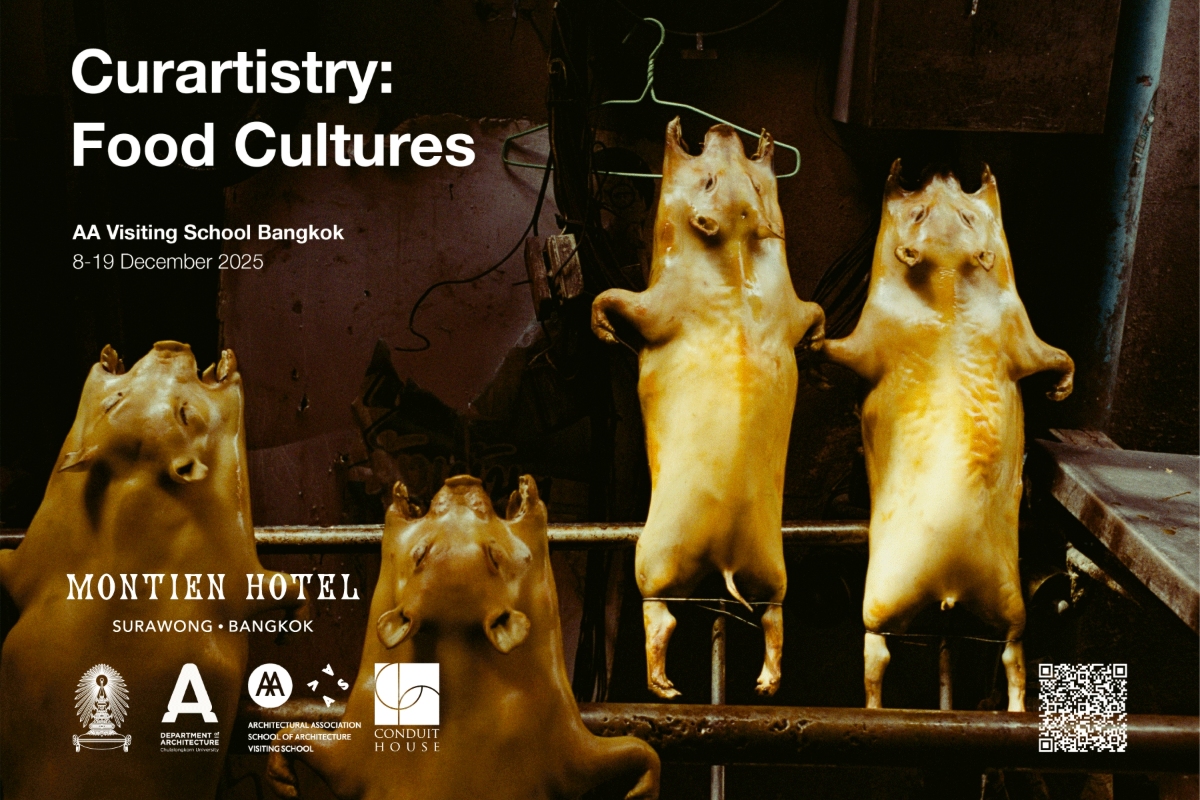
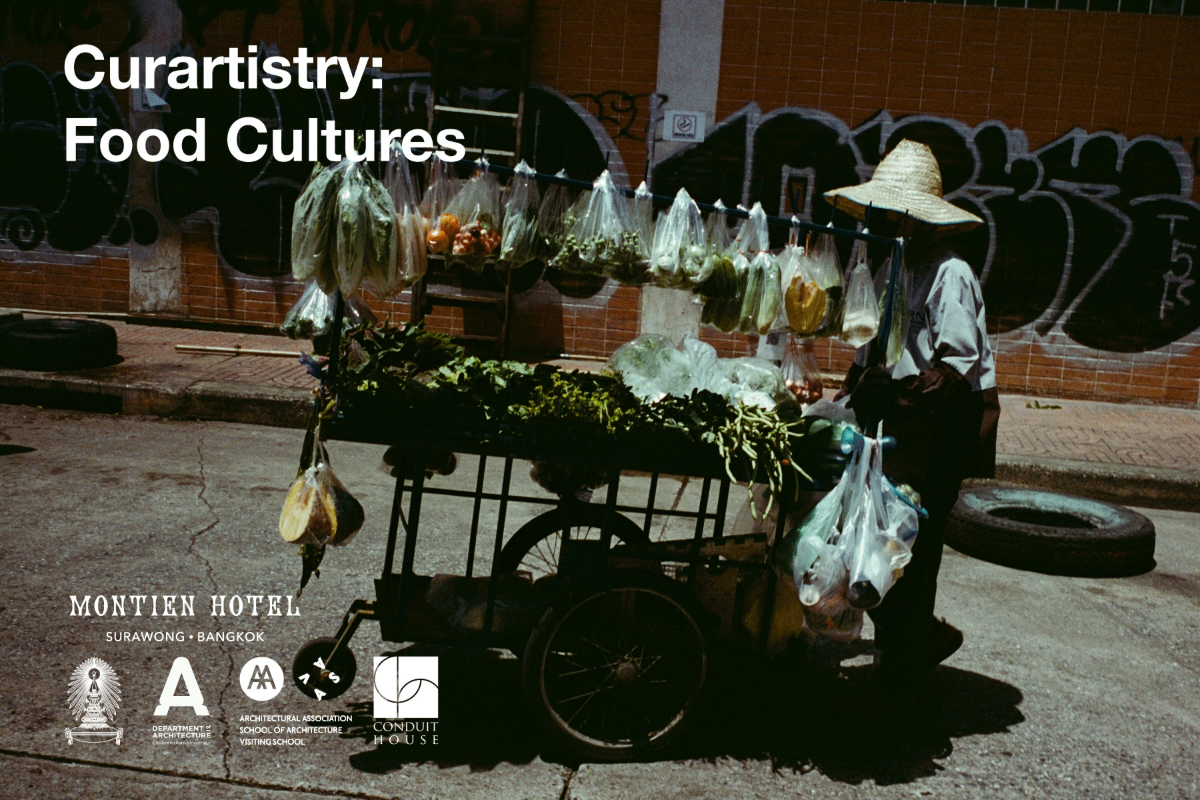
The exhibition emerges from the AA Visiting School Bangkok 2025, serving as both an outcome and a continuation of the program’s exploration into Bangkok’s diverse food cultures. It forms part of an ongoing research inquiry into how culinary practices, rituals, and spaces shape the city’s cultural landscape.
The works presented — spanning writing, photography, and photo essays — reflect a dialogue between image and text, observation and interpretation. Together, they offer a visual and narrative mapping of Bangkok’s evolving relationship with food as a medium of memory, identity, and everyday design.
The AA Visiting School Bangkok pays homage to the origin of ‘curartistry’, a term coined by Mark Cousins, the late director of the Architectural Association Histories and Theories Programme. In devising this term, he recognised the unintentional acts of curation that elevate everyday life into art. This year – the 12th year of the workshop – we will deepen our commitment to ‘curartistry’ by introducing a new theme: food cultures. This year’s workshop invites participants to document and elevate unique moments of the seemingly mundane, where subtle gestures, routines and rituals express profound aesthetic and cultural meaning, embedding in our memories. These overlooked fragments of everyday life carry within them a quiet wisdom that reveals the intricate logic of Bangkok: a teeming, kaleidoscopic metropolis shaped by improvisation, contradiction and sensory experience. This curatorial lens finds its fullest expression in the city’s streets, where everyday encounters become ephemeral exhibitions of food, faith and survival.
The workshop will unfold across three interwoven strands, each exploring a facet of Bangkok’s foodscape:
1. Production and Processing
We begin at the raw, often invisible edge of the food system. Participants will visit Trok Mor Market, an early-morning neighbourhood market in the Sao Chingcha area, and Khlong Toei Market, known as Bangkok’s central kitchen, where ingredients arrive daily. Accompanied by Chef Chalee Kader, we will visit a slaughterhouse and trace food logistics further to Simummuang Market, an agricultural distribution hub served by Rot Kap Khao and Rot Phum Phuang, vans and motorcycles that circulate produce to neighbourhoods across the city.
2. Commerce
Bangkok’s markets are engines of commerce as well as performative spaces of rhythms and codes. Participants will visit three distinct markets, mapping their architectural logic: how tables, stools, signage and surfaces shape behaviour and exchange. The 7-Eleven, with its chilled aisles, calibrated lighting and curated product displays, will be examined as a form of everyday luxury, where standardized global interiors meet local customs.
Architects Donlaporn Chanachai and Nattapong Phattanakosai will guide participants through their project Dine.alogue, which maps how dining spaces have evolved across Bangkok. Their work highlights how commerce, identity and spatial practice intersect, from informal eateries to conceptual dining experiences.
3. Auteurship
The final strand investigates the symbolic and representational life of food. Participants will explore how cuisine becomes narrative and a vehicle of cultural projection. We trace this lineage from historical figures like Marie-Antoine Carême, who transformed the idea of the chef into a theatrical figure of image-making, to contemporary chefs who build dining as experience. Chef Kader will offer insight into how the act of cooking becomes a vehicle where ingredients, space and memory are composed into story.
This strand also examines food beyond consumption: as offering, as ritual, as architecture for the dead. Participants will study practices of tending to the departed such as the arrangement of food on altars and how the aesthetics of spirit offerings reveal a logic of memory, obligation and love.
Contact
Attending
Free
Schedule
29 Jan - 8 Feb 07:00 - 00:00
Venue
Share